

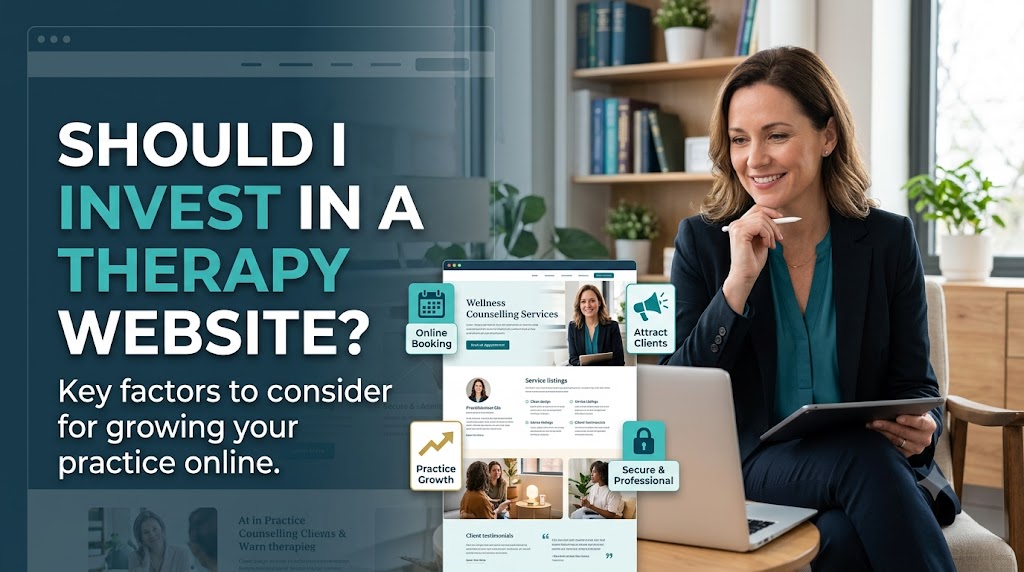
Yes, investing in a website or establishing a professional online presence is highly valuable for a therapy practice. A dedicated website builds clinical credibility, sets your practice apart from amateur setups, and acts as a long-term business asset.
However, when therapists do not have an established system or website, they often default completely to social media. While platforms like Instagram have high traffic and are great for spreading general mental health awareness, they fail miserably at bringing in high-quality, serious clients for two main reasons:
-
The Algorithm Trap: Social media algorithms are designed to keep users hooked by matching their mood. If a user is feeling anxious, sad, or depressed, the platform continues to feed them more sad and depressive content just to keep them scrolling. It is a space built for temporary emotional distraction, not for serious clinical help.
-
Safety & Quality Bottlenecks for Female Therapists: The therapy industry has a massive demographic of female practitioners. When female therapists post content on Instagram or Facebook, their Direct Messages (DMs) quickly get flooded with low-quality, casual messages from random guys. Instead of genuine clinical inquiries, they get hit with casual “Hi,” “Hello,” or “Can we chat?” messages. These users have zero understanding of what a psychologist actually does; they treat the account like a casual social network, creating an unprofessional and time-wasting environment.
The Bottom Line: Ultimately, 80% to 90% of high-quality, high-intent therapy clients come directly from Google searches. When people are in a real crisis, they do not scroll through an entertainment app—they actively go to Google to look for help.
What was the initial business situation of your client, Anushka Goyal?
Anushka Goyal had been running her counseling practice for 5 years. When I asked her about her primary source of clients—whether they came from referrals, social media, or Google, she opened up honestly about her struggles.
She told me that over the last 5 years, every single client she handled came strictly through warm personal referrals, like a friend recommending her to someone else. She explicitly told me:
“I cannot truly call them commercial clients because they are all just extensions of my personal social circle. I want to build a real brand in the market where people recognize my name as an established independent counselor, but I don’t know how to do that.”
Even though she was highly active on Instagram, making reels and generating awareness content with a good follower count, she had received exactly zero premium, cold clients from the platform. Her DMs were entirely trapped in that frustrating cycle of casual, unprofessional messages.
What was her marketing budget, and how did you plan the strategy?
When we discussed her marketing budget, the reality was that even though she had 5 years of experience, she had previously been working a job and her independent practice relied on low-paying personal referrals. Because of this, she simply did not have the upfront funds or capital required to invest in a premium, custom website right away.
I gave her a highly practical, step-by-step strategy to overcome this without needing a massive budget. If you don’t have upfront funds, you don’t need to panic. We started with the basic fundamentals that cost absolutely nothing:
-
Google Business Profile Setup: We created a completely free Google Business Profile for her practice and took it through the official verification process. This step required zero domain or hosting costs.
-
Hyper-Local Optimization: I audited her services section and meticulously filled out every single category. I wrote detailed, keyword-rich descriptions for the exact therapies and clinical modalities she offers.
-
Social Proof & Engagement: We optimized her profile with regular localized updates, professional photos, and high-quality custom banners. Most importantly, we reached out to her past referral clients—the ones who had successfully completed therapy sessions with her, and asked them to leave honest, genuine reviews detailing their real experiences.
What were the ranking results after the optimization, and how did it change her booking process?
Once the profile was fully optimized and her authentic client reviews started rolling in, the impact was almost immediate. Within the very first month, her profile successfully cracked the Google local map algorithm. She started ranking right at the top of the search engine results page for two highly competitive, high-intent local keywords:
-
‘Marriage Counselor in Delhi’
-
‘Best Marriage Counselor in Delhi’
The intent behind these keywords was incredibly strong because the people searching for them were actively and desperately seeking professional help for their relationships. Since we had strategically integrated a direct appointment booking link right onto her verified Google profile, these high-intent users immediately began booking actual clinical consultations.
Instead of waking up to annoying, casual “hi, hello” DMs on Instagram, she was now receiving concrete, confirmed appointments from genuine, paying clients. It turned her entire client acquisition process into a completely automated, professional, and seamless experience.
Why do you say a Google Business Profile is Step 1, and a Website is Step 2?
The decision to make the Google Business Profile Step 1 and a website Step 2 comes down to sheer financial logic, speed, and real-world user behavior:
-
The Financial Logic: Building a proper website requires upfront funds for a domain, hosting, a developer, and professional content writers, which solo or struggling therapists often do not have. A Google Business Profile costs absolutely nothing, takes very little time to set up, requires no technical hosting, and gives you free local visibility instantly. It allows you to generate revenue before spending money.
-
Real-World User Behavior: Think about it like a normal user. If someone is facing a crisis in their marriage and they type “best couple therapist near me” into Google, the very first thing that appears at the top of the screen is the Google Map Pack (the Google Business Profiles). Organic website links only appear below those map listings. If Google itself is prioritizing these local profiles at the absolute top of the page for free, it makes perfect sense to build your profile first to capture immediate, top-tier visibility.
Once a therapist makes money from Google and can afford a website, what does Step 2 do for them?
Once a therapist graduates to a dedicated website, they unlock a massive marketing advantage known as Search Engine Dominance.
By having both assets active, you suddenly have two powerful platforms working for you simultaneously. When your Google Business Profile and your website both rank on the first page for the exact same high-intent keyword, your lead generation skyrockets. If a potential client bypasses the Google Map Pack, they will click your organic website link right below it. You occupy two major pieces of real estate on Google’s first page, making it almost impossible for a client to miss you.
Furthermore, a website builds a sustainable, long-term digital asset. Even if you stop actively working on your marketing in the future, a well-optimized website runs 24/7 in the background, consistently bringing in premium clients on autopilot.
| Strategy Element | Social Media Ads | Google + Website Dominance |
| User Intent |
Casual scrolling / Interruption |
Actively searching for help |
| Lead Quality |
Low / Unvetted messages |
High / Confirmed bookings |
| Long-Term Value | Stops when budget stops |
Runs 24/7 on autopilot |
If you look at successful, highly established practices out there—you can even look up prominent clinics on Google like Insight Therapy LLC, they don’t build their businesses on Instagram DMs. They dominate search engines with highly professional websites backed by strong local map visibility. Out of practical logic, the Google profile is undeniably Step 1, and a dedicated website is the ultimate Step 2.