

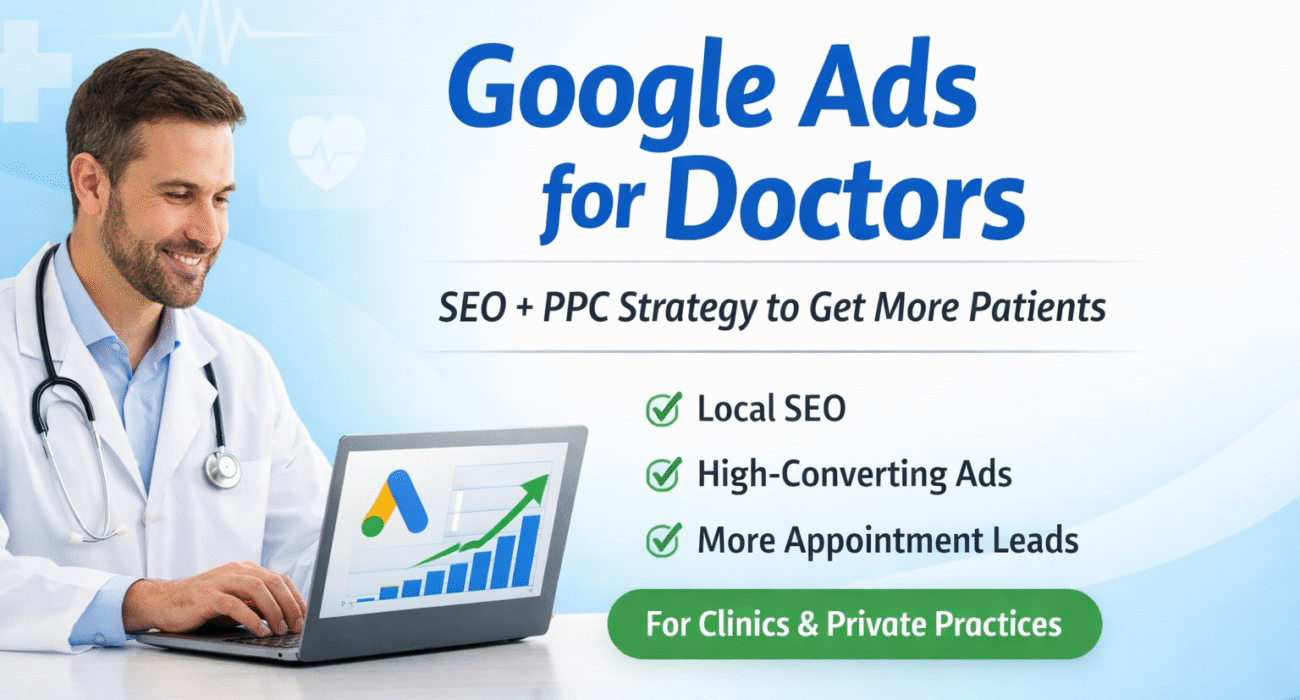
In the medical world, trust is the only currency that matters. In 2026, the way patients find you has shifted. They don’t just “Google it”; they ask AI assistants, they watch short-form medical videos, and they scan for immediate “Book Now” buttons.
If you are running Ads without SEO, you are overpaying for every patient. If you are doing SEO without Ads, you are losing patients to the clinic down the street that is willing to pay for the top spot. Here is how you combine them into a single, high-performance machine.
1. The Core Strategy: Why You Need a “Dual-Track” Outline
The biggest mistake medical practices make is treating Google Ads and SEO as two different departments. They should be one conversation.
The “Immediate vs. Evergreen” Balance:
-
Google Ads is your “faucet.” You turn it on, and patients flow in immediately. It’s perfect for high-revenue procedures like LASIK, dental implants, or joint replacements.
-
SEO is your “orchard.” You plant the seeds now, and eventually, you get “free” patients forever.
The Secret Sauce: Use your Google Ads data to see which keywords actually lead to a booked appointment (not just a click). Once you find a “winning” keyword in Ads, you immediately hand it over to your SEO team to build a permanent, high-ranking page for it. This is how you stop “renting” your traffic and start “owning” it.
2. High-Intent Keyword Intelligence: Beyond the Basics
Your competitors are bidding on “Doctor near me.” That is a rookie mistake that leads to $40 clicks and low conversion. Your Google Ads for doctors SEO outline needs to focus on Intent.
The Diagnostic vs. Transactional Split
-
Diagnostic Keywords (SEO Focus): These are patients searching for symptoms.
-
Example: “Why does my lower back hurt when I sit?”
-
Strategy: Don’t waste Ad spend here. Instead, write a 1,500-word SEO guide titled “5 Reasons for Lower Back Pain While Sitting.” This positions you as the expert before they even know they need a surgeon.
-
-
Transactional Keywords (Ads Focus): These are patients ready to book now.
-
Example: “Best spine surgeon in [Your City] accepting BlueCross BlueShield.”
-
Strategy: This is where you bid aggressively. These patients have their insurance card in hand and are ready to call.
-
3. The 2026 “Trust Gap”: Solving the Landing Page Problem
You can have the best Ads in the world, but if your website looks like it was built in 2015, the patient will leave. They equate the quality of your website with the quality of your care.
The Anatomy of a High-Converting Medical Landing Page:
-
The “3-Second” Hero Section: Within three seconds, the patient must see: Your specialty, your location, and a “Book Appointment” button.
-
Social Proof (E-E-A-T): Google’s 2026 algorithm lives on “Experience, Expertise, Authoritativeness, and Trust.” Show your board certifications, your years in practice, and real patient video testimonials.
-
The Insurance Filter: One of the biggest “leaks” in medical marketing is the “Do you take my insurance?” question. Put a clear list of accepted providers right on the page to reduce bounce rates.
-
Direct EHR Integration: In 2026, “Fill out this contact form and we will call you back” is dead. Patients want to see your actual calendar and pick a slot via NexHealth, Zocdoc, or Epic.
4. Problem-Solving: Managing the “Money Pit”
Let’s be honest: Google Ads can be a black hole for your budget if not managed with a medical lens.
The Negative Keyword Fortress
A standard agency will miss the nuances of medical terminology. You need a “Negative Keyword” list that filters out non-patients.
-
Exclude Educational Intent: Terms like salary, jobs, residency, school, exam, board results.
-
Exclude Irrelevant Specialization: If you are a Cardiologist, you must exclude “Pet cardiologist” or “Veterinary.” You would be surprised how much money is wasted on pet-related searches.
-
Exclude “Free” Seekers: Terms like free clinic, home remedies, cheap, discount.
The HIPAA Compliance Trap
Google has tightened its 2026 policies on “Sensitive Information.” You cannot “retarget” a patient who looked at a page for a specific illness (like “HIV treatment” or “Cancer center”). This is considered a privacy violation. Your outline must focus on Contextual Targeting—showing ads based on what they are searching for right now, not where they have been in the past.
5. Technical SEO: Preparing for the “AI Overview” Era
Google’s Search Generative Experience (SGE) now provides AI-written answers at the top of the page. To win in 2026, your SEO content must be the “source” for that AI.
-
Schema Markup (MedicalEntity): This is code you add to your site that tells Google’s AI exactly what you do. It specifies your “MedicalSpecialty,” your “AvailableService,” and your “AdheringGuideline.”
-
Authoritative Bylines: Every piece of content must have a “Medically Reviewed By” tag with a link to the doctor’s credentials and NPI number. Google no longer trusts generic medical advice; it wants to know a human doctor vetted the words.
6. The “Local Pack” Dominance
For a doctor, your Google Business Profile (GBP) is arguably more important than your website.
-
Review Velocity: It’s not just about having 5 stars; it’s about how recent they are. An SEO strategy must include a system for asking patients for reviews via SMS immediately after their appointment.
-
Local Service Ads (LSAs): These are the “Google Screened” ads at the very top. They work on a “Pay Per Lead” basis rather than “Pay Per Click.” For primary care and dentists, these are often more ROI-positive than standard search ads.
7. FAQ: Everything You’re Actually Wondering
Q: How much should I actually spend on Google Ads? A: Stop thinking about a “monthly budget.” Think about Patient Acquisition Cost (PAC). If a new patient for a specific surgery brings in $3,000 in profit, and it costs you $150 in Ads to get that patient, you should spend as much as your surgical schedule can handle.
Q: Can I just use AI to write my SEO blogs? A: You can use AI to outline, but if you let it write the whole thing, your rankings will eventually tank. Google’s 2026 spam filters are designed to detect generic medical text. A human doctor must add “clinical anecdotes” or unique perspectives to make it rank.
Q: Why are my Ads showing in the next state over? A: This is a common setting error. You must set your location targeting to “Presence” (people in your location) rather than “Interest” (people searching about your location).
Q: How long until I see SEO results? A: For medical practices, expect 3 to 6 months to see organic movement. This is why we use Google Ads in the meantime—to keep the lights on while the SEO builds.
8. Summary: The 2026 Checklist
To truly dominate your local market, your Google Ads for doctors SEO outline should include:
-
Keyword Mirroring: Use Ad data to find SEO opportunities.
-
Conversion-First Design: Direct EHR booking and insurance transparency.
-
HIPAA-Safe Tracking: No “pixels” on sensitive pages; use server-side tracking.
-
E-E-A-T Content: Human-vetted, medically reviewed articles that AI Overviews will cite.